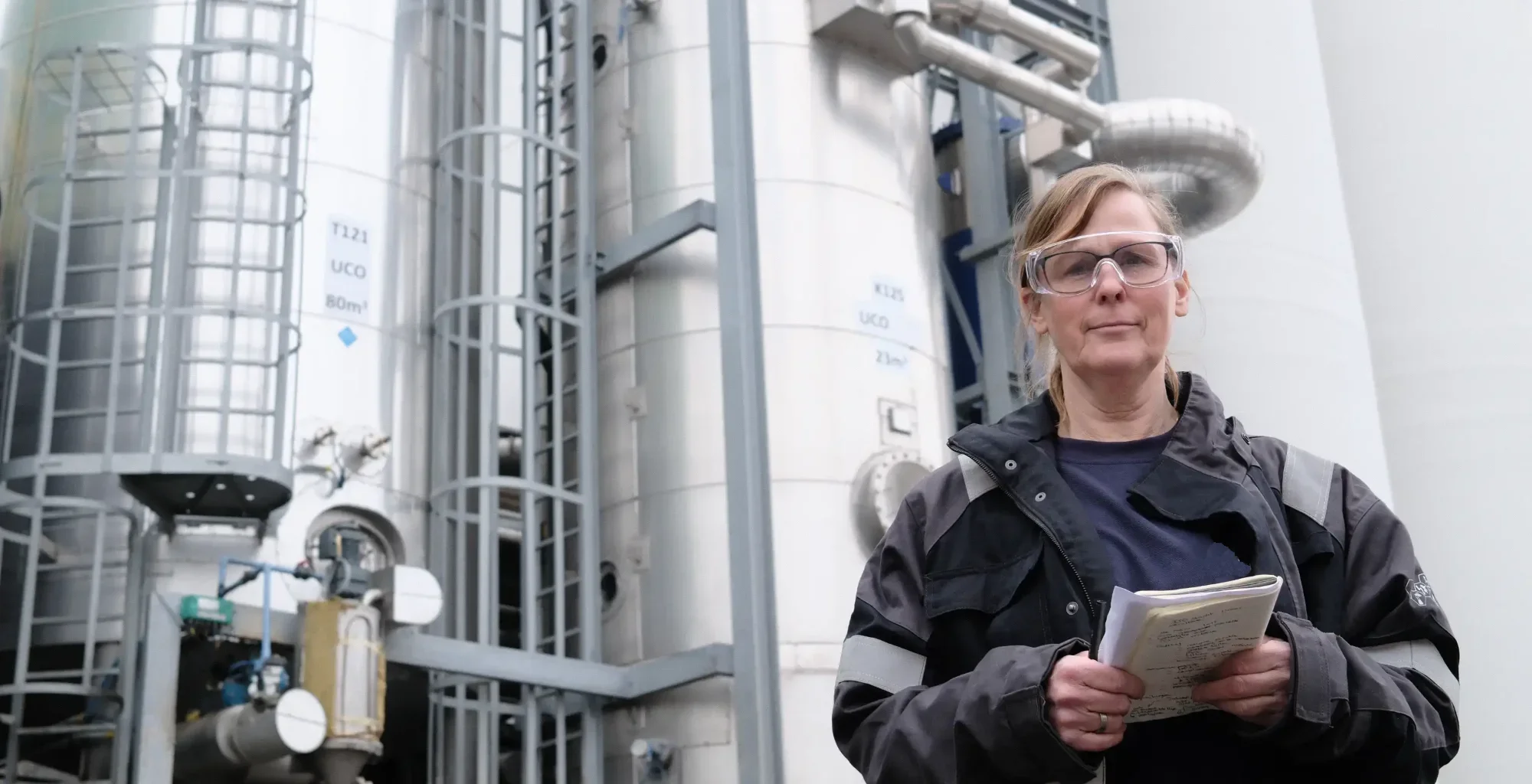
Let’s start at the beginning:
We figured out that with gloves, shielding, a harness, a mask, safety shoes and various clothing requirements, the work is safer.
I can agree that this is often not the case at all.
I downright hate gloves and use them only when there is really no other way. We have been given senses, such as a sense of feeling, and that cannot function properly with gloves. You feel your workpiece and the conditions less, and thus your sensitivity to recognize danger.
It’s hard to explain, but you have to be able to feel what you’re doing. Just like you need your eyes while working and glasses can be a hindrance to that, it actually works the same way with gloves.
I mentioned the harness briefly in the second blog post: the danger of having to unhook the line and reattach it elsewhere while working at life-threatening heights.
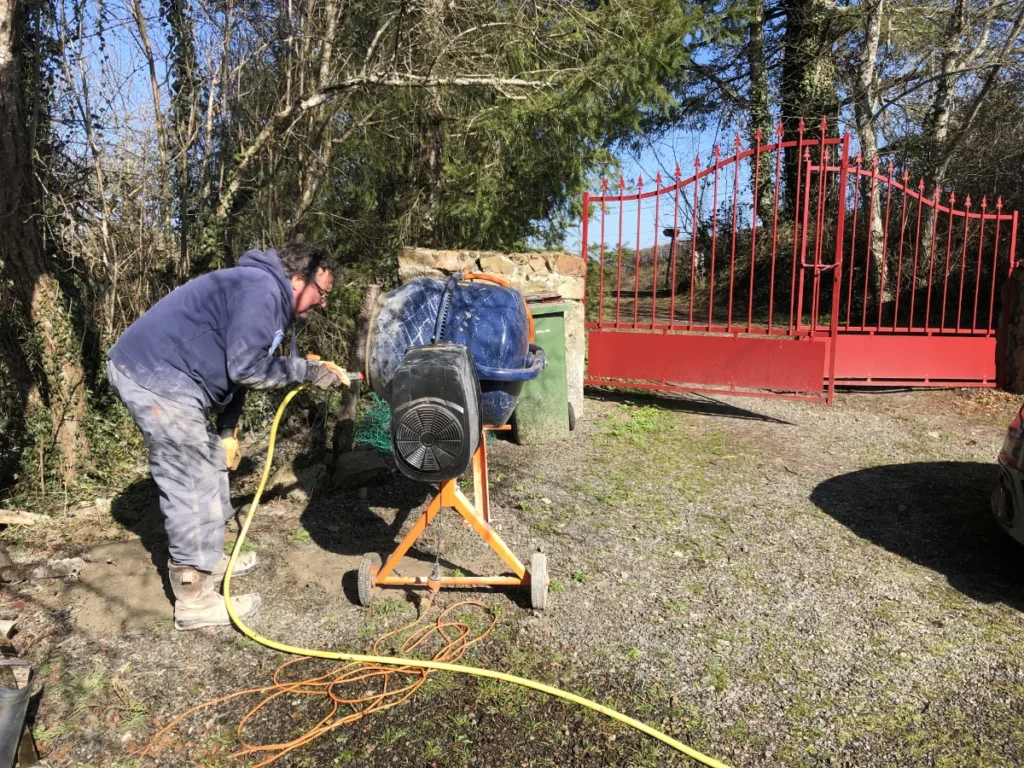
Or yesterday’s situation: I was wearing my fabulous, padded safety boots (I mean it, they are really great), and a beam, of course, fell not on the steel toe cap … but on my instep. Which resulted in a dainty bruise.
When is it really necessary?
Personal Protective Equipment can be very useful and valuable, but with the understanding that it really adds something and that you are actually at risk without it.
When I work with hazardous materials, a good glove is really necessary.
When I’m doing grinding or drilling work, safety glasses really make sense.
Although then those safety glasses must give good vision, and unfortunately that is not always the case.
But wear gloves with everything or use a safety knife? Frankly, I prefer a good, sharp knife. So that what I cut is actually cut well, just like in the kitchen. Because nothing is as dangerous as a blunt knife…..
Hand tools with shielding?
My father, who is almost 80 years old, keeps saying that a shield – on a grinder, for example – is dangerous. Because you have to be able to see what you’re doing, and that’s often not possible with such a hood around it. He also states that you have to keep your eyes on the danger and be aware that it is dangerous. And that once you think it’s safe, you may not pay as much attention.
I don’t necessarily agree with that, but I get the idea. Because as I mentioned earlier; a shield that is poorly done can also actually make the situation even more dangerous. It’s really not nice if the hood falls off while you’re grinding, and unfortunately, that just happens.
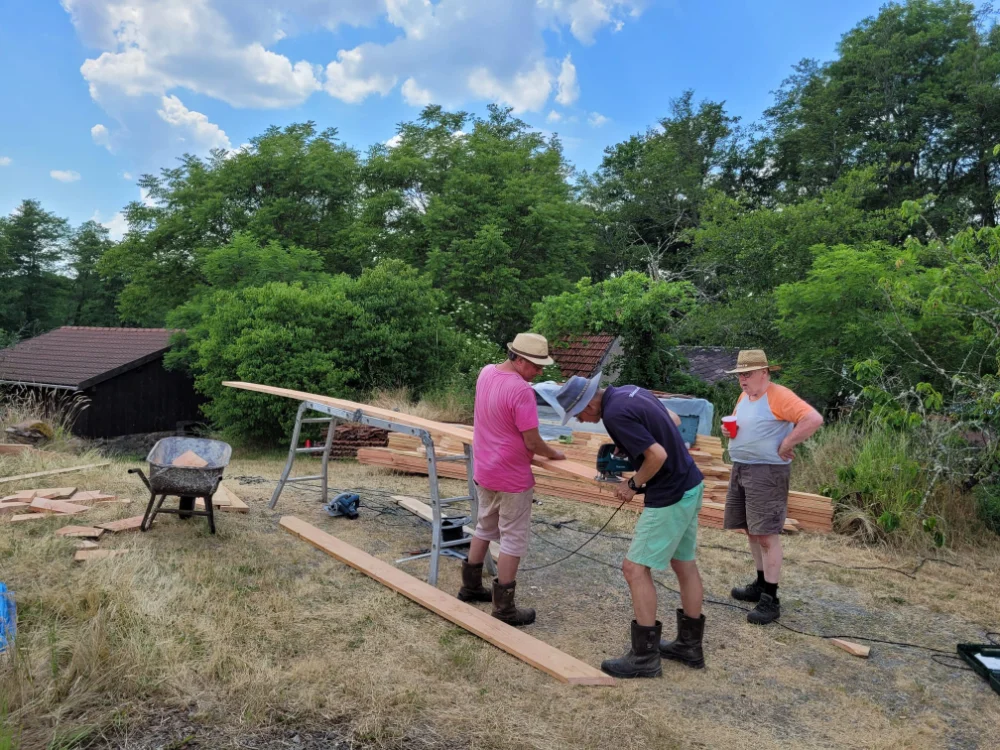
Spiekers Trekk’n
What my father does insist on (funny pun) is that old nails and screws should not be left in boards and beams. You should always pull those out, or grind them down if necessary because “spike pull’n” is not as easy as you probably think.
It’s really lol when you press your palm into a rusty nail. And it happens even though you pay so much attention.
He also insists on keeping your workplace tidy and organized. Logical, of course. But tidying up is not something that gives me a lot of energy. Still, it helps a lot that all the junk is on the side (don’t exaggerate).
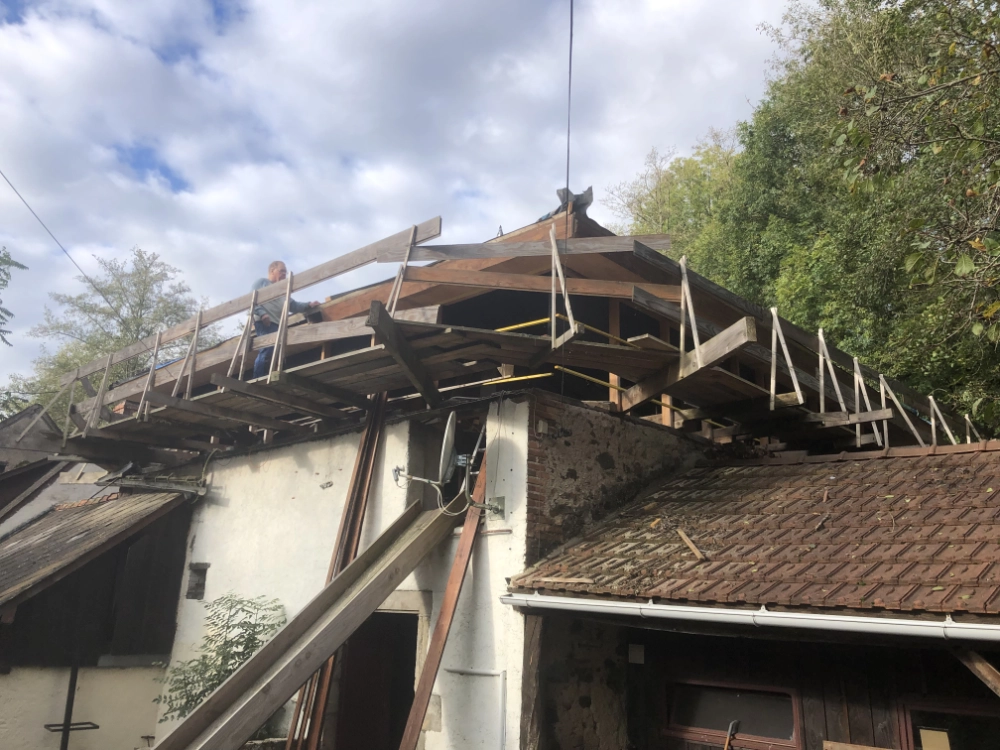
What can I do?
With some thirty years of experience in my profession, HSE: Health, Safety & Environment, I know a thing or two about it. But I have now experienced firsthand how difficult it is to:
- be aware of dangers.
- work safely themselves.
- allowing others to work safely.
- and make sustainable choices.
And that makes me want to do better as an HSE person. So, what can I do to help SMEs that:
- want and need to focus on delivering their jobs
- being mostly concerned with getting the next job
- continuously need to get better at their craft
- cannot afford to set up an HSE organization
- do have to comply with all laws and regulations
- preferably also want to improve people’s working conditions
- and also want to make more sustainable choices, both in future investments and in the materials they use.
Doing it together
All this leads me to the following proposition:
It works best when we determine safety resources together, along with the person doing the work.
As the safety expert, be the one who knows what is possible, what is required by law, and come up with test material to examine what works and what doesn’t work.
The man or woman doing the work knows very well what is handy and necessary to do that specific job well. And especially what does not help to make the work safer or better. That is why determining the right personal protective equipment is a joint action.
As an HSE practitioner, respect professionals, who often try to do their jobs as well as possible under difficult circumstances (such as a safety expert standing on the sidelines shouting something, or worse: imposing safety rules). And are generally very good at it.
This is how I approach my work at SecuDura every day: by organizing HSE in such a way that it supports rather than burdens. By doing it together, person to person.